
By Paula A. Johnson
Mother, Mimi, Mentor, and Grief Companion
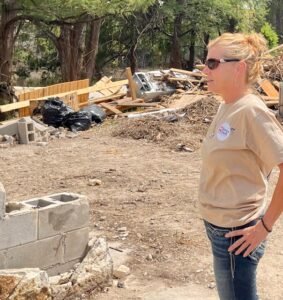
Paula Johnson has been counseling community members after the devastating flooding that occurred in Kerrville, Texas on July 5, 2025, and was approached by her local newspaper and asked these questions about grief. We are grateful to reprint with her permission.
How can one be sensitive to others after a tragedy like this?
When someone’s world has been swept away — by loss, by sorrow, or by any grief too heavy to bear — what they need most isn’t advice. Never advice. What they need is presence. Being sensitive after something this devastating means slowing down. Listening. Letting others grieve out loud — or in silence.
Some will cry. Some will go quiet. Some will need to talk about what happened again and again. Some won’t be ready yet. There’s no one way to hurt. And no one way to help. And absolutely no way we “fixers” can fix this.Its kindness, its patience, and gentle compassion people need from us. A hug, a handshake or even a silent moment holding hands in love.
You don’t have to fix the pain. Just let them know you see it. You see them. You LOVE them and need nothing from them. That matters more than you’ll ever know.
How can we process our own grief?
Grief this deep doesn’t have a clear beginning or end — it doesn’t have a path, it doesn’t discriminate, it devastates.
It’s the sound of what was echoing through what is now missing. Without any ability to hit pause on the spin cycle.
Processing your grief or others grief may feel impossible in these early days — when survival mode takes over. When you’re still searching for solid footings, both physically and emotionally.
But even now… it is the smallest of small acts that mean the most. Just breathing through one more moment. Sitting in stillness. Tears have meaning, they are soul-soothing. Allow yourself to feel and respond, and know it is okay to grieve. You are not expected to feel okay.
Grief is not something to fix — it’s something to tend to, slowly, gently, honestly. You lost or watched the loss of more than things. You lost or watched parts of life’s stories changed forever. You are allowed to mourn every inch of what your heart is feeling, your eyes are seeing. Give yourself and others grace.
What’s the best way to move forward when life feels destroyed?
After an event that is so catastrophic, “moving forward” can sound cruel. Don’t think it or say it, again choose grace.
You don’t move on from love. Or from the life you had before our shared catastrophic disaster. You move with it. Sometimes you move through it, just barely. Embrace every moment, all the small glimpses of hope. The truth on moving forward is to move softly and be gentle with yourself.
There is no finish line to grief, only moments where you feel something new. There is no roadmap to recovery. But there is strength in the showing up. There is healing in community, our community, together. There is power in saying, “Today, I’m still here.” Count the small victories a strength. Let the moments be enough.
You are not alone. You are never alone. Even in this life-altering, broken place, you are held by more hearts than you know.
Paula A. Johnson is an award-winning community builder and military spouse whose leadership has guided disaster recovery, grief support, and humanitarian outreach across the nation.